
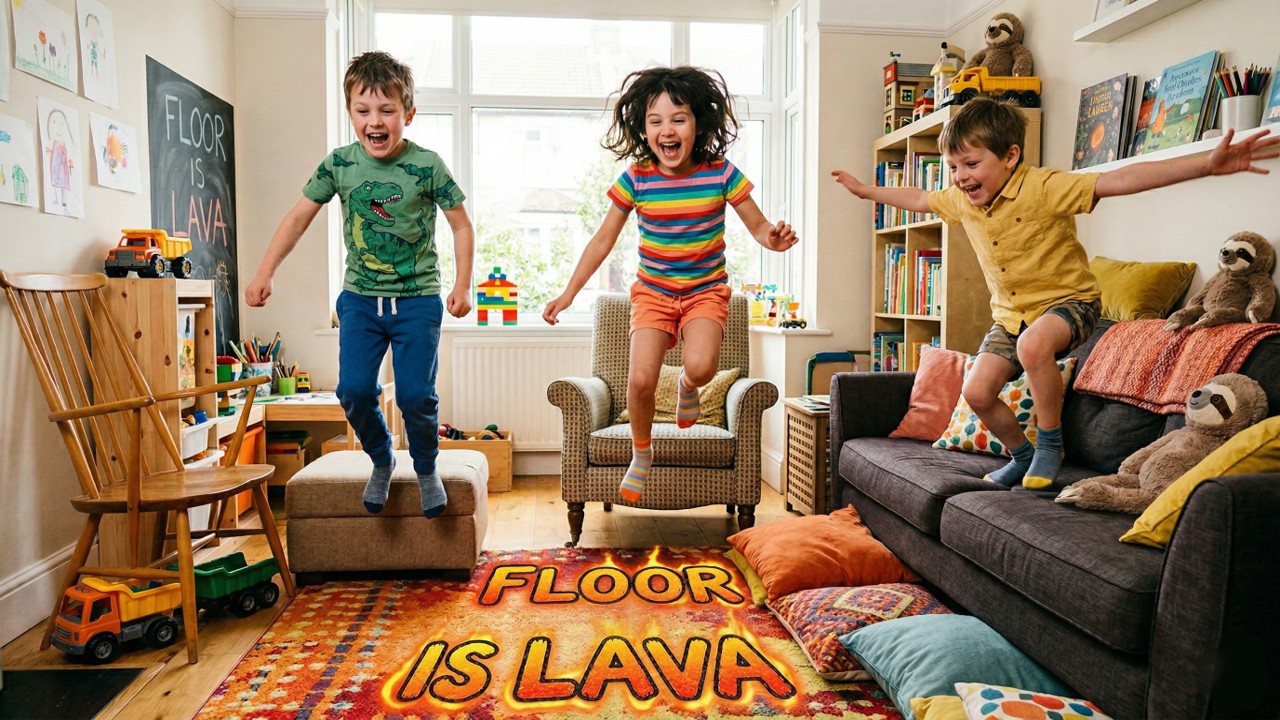


Floor is Lava is one of the most popular imaginative kids games played at home, school and playgrounds. It’s favourite timepass of mine and my kids too. In this game, children pretend that floor has turned into hot lava, so they must quickly move onto safe objects like cushions, furniture or stepping stones without touching the ground.
As it combines imagination, quick reactions and movement so this classic game is liked by parents, teachers and PE instructors to encourage active play while improving balance and coordination.
- Materials Needed:
Cushions or pillows, Chairs or stools, Gym mats, Paper plates or cardboard pieces, Cones or stepping discs, Blankets or small boxes. These objects act as “safe islands” where children can stand without touching the lava floor.
- Number of Participants:
| Play Type | Recommended Players |
| Small home game | 2 – 4 players |
| Classroom or PE activity | 10 – 30 players |
| Playground challenge | 5 – 15 players |
- Age Group: 4–12 years
- Play Area: Living room, Classroom, School gym, Playground or Backyard
- Play Time:
| Game Type | Duration |
| Quick round | 5–10 minutes |
| Classroom activity | 10–20 minutes |
| Party challenge | 20–30 minutes |
How to Play Floor is Lava (Step-by-Step)
Step 1: Prepare your Play Area
It is the most important part of this game as whole game depends on your play area. Place cushions, chairs or stepping spots around the room or field where players can easily jump on.
Step 2: Explain the Lava Story
Tell all players that the floor is now hot lava and if any player touches the floor, he will be out of game.
Step 3: Start the Game
One player shouts “The Floor is Lava! Don’t step in”.
Step 4: Countdown begins
Players get only 5 seconds to jump onto a safe object.
Step 5: Move Between Safe Spots
All players must travel across objects safely without touching the ground.
Step 6: Elimination or Restart
If any player touches the floor, he is out or must restart the round.
Step 7: Declare the Winner
The last player standing safely wins the game.
Rules
- The basic Floor is Lava game rules are simple and easy for children to understand.
- The floor represents lava and cannot be touched.
- Players must stand only on designated safe objects.
- No pushing or pulling other players is allowed.
- Players should move carefully between safe spots.
- If a player touches the floor, he is out or restart the round.
- These rules keep the game safe and fair for all participants.
Benefits
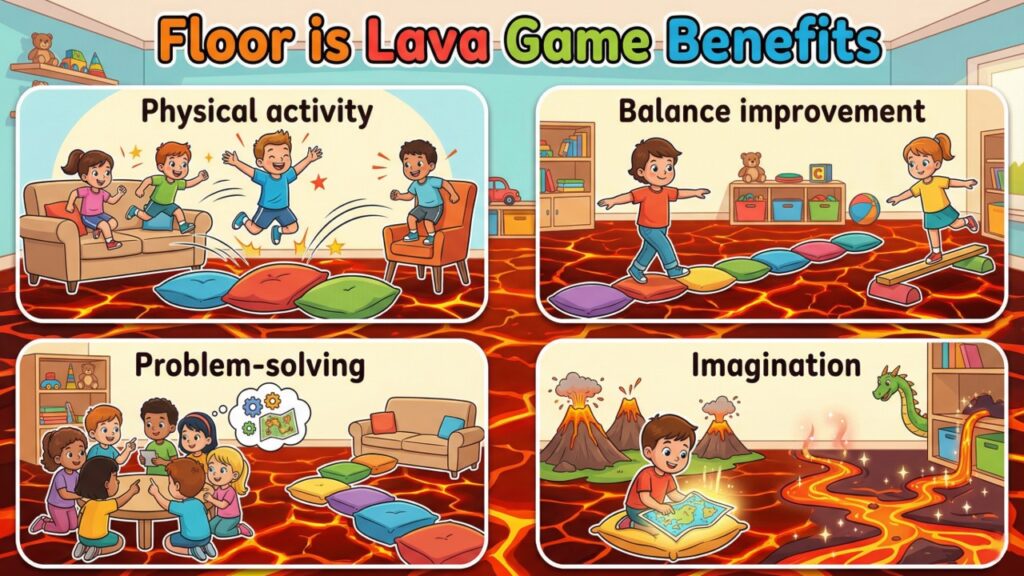
Playing Floor is Lava offers several physical and mental benefits for children.
| Benefit | Description |
| Physical activity | Encourages jumping, climbing and movement |
| Balance improvement | Kids learn to stabilize themselves on objects |
| Problem-solving | Players must plan routes between safe spots |
| Imagination | Pretend play stimulates creativity |
Variations of the Floor is Lava Game (Detailed)
The classic Floor is Lava game rules can be modified in many creative ways to keep children engaged and make the activity suitable for different environments like classrooms, playgrounds or homes. These variations add new challenges while maintaining the core idea of avoiding the lava floor.
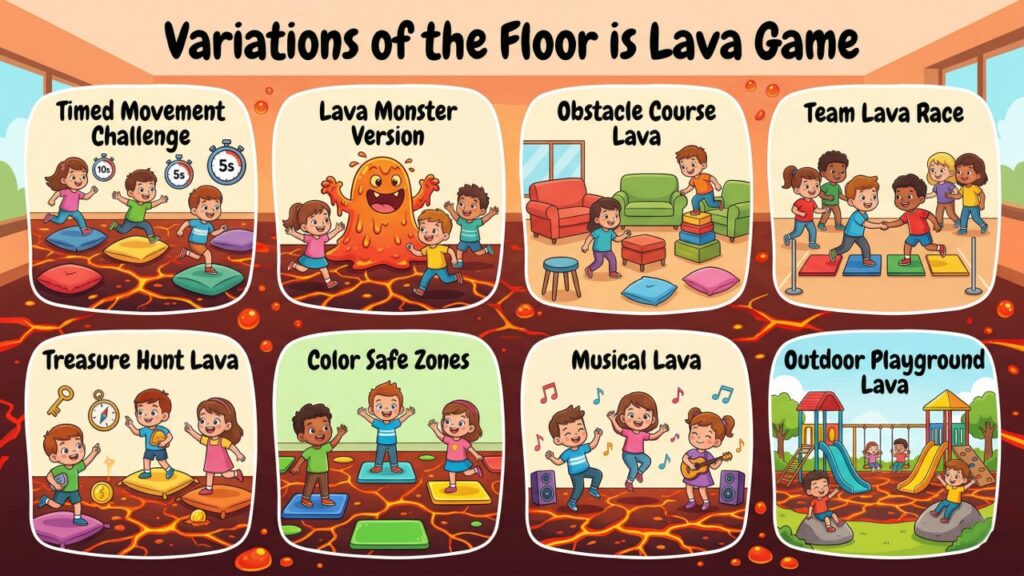
1. Timed Movement Challenge
In this variation, players cannot stay on one safe spot for too long. A leader or teacher sets a timer and announces movement intervals.
How it works:
- Players start on safe objects like cushions, chairs or stepping stones.
- Every 10–15 seconds, the leader says “Move!”
- Players must jump to another safe object before the time runs out.
- Anyone who touches the floor is out of the round.
2. Lava Monster Version
This is one of most exciting versions of the Floor is Lava game for kids because it adds a tag element.
How it works:
- One player becomes the Lava Monster.
- The Lava Monster moves on the ground while others stay on safe objects.
- The monster tries to tag players who are moving between safe spots.
- If a player is tagged or touches the floor, they become the next Lava Monster.
3. Obstacle Course Lava
This variation turns the game into a structured physical challenge.
How it works:
- Arrange objects in a path such as cushions, benches, cones, and mats.
- Players must follow the course without touching the floor.
- Each player completes the route one at a time or in teams.
- The fastest player or team wins.
4. Team Lava Race
This variation introduces teamwork and friendly competition.
How it works:
- Divide players into two or more teams.
- Each team must cross the lava area using a limited number of safe objects (such as three mats).
- Players must move the objects forward while standing on them.
- The first team to reach the finish line wins.
5. Treasure Hunt Lava
This version combines imagination with problem-solving.
How it works:
- Small objects such as toys or balls are placed around the room.
- The floor is still lava.
- Players must collect the treasures while staying on safe objects.
- Each treasure collected earns points.
- Player with maximum points wins this game.
6. Color Safe Zones
This variation introduces color recognition and listening skills.
How it works:
- Place colored mats, papers or cushions around the room.
- The leader calls out a color such as “Red is safe!”
- Players must move quickly to a safe spot with that color.
- Anyone who fails to reach the correct color before the countdown or touches lava is out from game.
7. Musical Lava
This variation combines music with the Floor is Lava game rules.
How it works:
- Music plays while children move around the room.
- When the music stops, the leader shouts “The Floor is Lava!”
- Players must quickly jump to a safe object.
- One safe spot is removed each round, similar to musical chairs.
8. Outdoor Playground Lava
This variation adapts the game for playgrounds or parks.
How it works:
- Playground equipment such as benches, rocks or climbing structures become safe zones.
- Grass or sand represents lava.
- Players travel across structures without touching the ground.
- The player who reaches the finish point first wins.
Skills Developed
1. Balance and Coordination
With this game, children can carefully control their body while standing on small surfaces like cushions or stepping discs which in return improves their balance and body coordination over time.
2. Quick Decision Making
As players have only seconds to react when the lava call happens. This develops fast thinking and quick decision making skills in kids.
3. Problem Solving
As game begins, kids evaluate the safest route from one object to another and learn to plan movements and adapt strategies during the game.
4. Social Skills
When playing this game in groups, children learn teamwork, patience and fair play while waiting for their turn.
Safety Tips
Safety is utmost important when playing active indoor games. These tips ensure the game stays fun and injury free. Some of safety tips to follow while playing Floor is Lava game are:
- Use stable furniture or soft cushions only.
- Remove sharp objects from the play area.
- Do not allow rough pushing or jumping.
- Use gym mats if possible.
- Supervise younger children during the game.
Why Parents Love Floor is Lava Game?
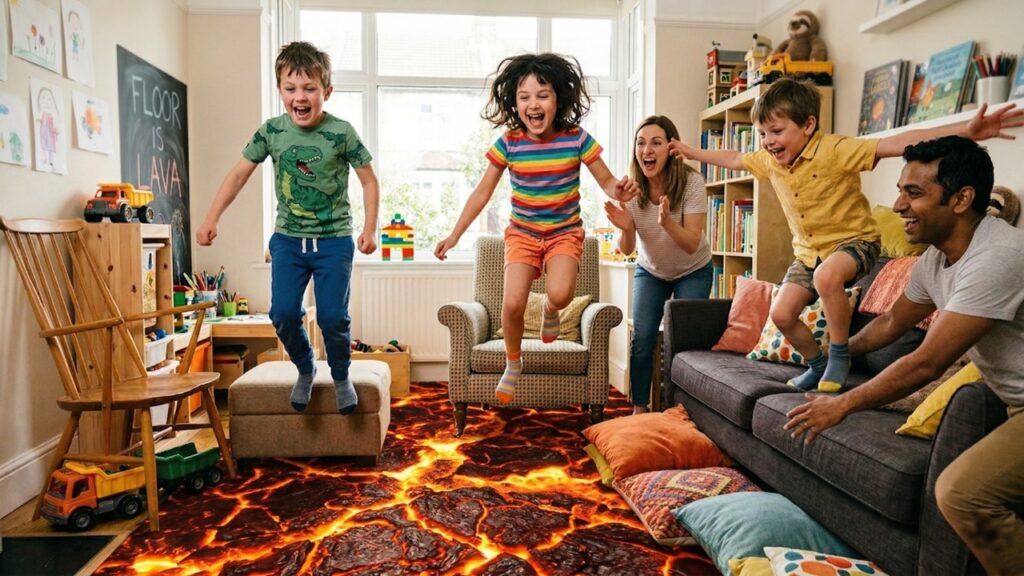
Parents and teachers love Floor is Lava because it requires less equipment and encourages physical activity more. Here are some reasons for its popularity:
- Easy to organize
- Works indoors and outdoors
- Encourages creativity
- Keeps kids active without screens
- Suitable for family play
Frequently Asked Questions (FAQ)
Conclusion
Floor is Lava is easiest and most exciting game for kids. With only a few simple objects and a little imagination, children quickly turn any room, classroom or playground into a fun adventure. This game encourages movement, quick thinking and creativity. It keeps kids actively engaged. As this game requires minimal setup and works for both indoor and outdoor play, it continues to be a favorite activity for families, schools and physical education programs.
When played with clear rules and proper safety measures, this simple game provides hours of active, imaginative fun for children of all ages.
Have you played Floor is Lava with your children?
Share your experience in the comments
Feel free to share your feedback or suggestions. Thank you !