


Introduction
Some of the best indoor games for kids are the ones that need absolutely nothing to get started. No equipment. No prep time. No mess to clean up afterward. The Follow the Leader game is exactly that kind of activity, and honestly, it is one of those rare games that works just as well for a single child at home as it does for a classroom full of twenty kids on a rainy afternoon.
The concept is beautifully simple. One child leads, everyone else copies. But what looks like just playful movement is actually doing a whole lot of good under the surface. Children are sharpening their attention spans, building coordination, developing body awareness, and learning to take turns in a social setting. All while having a genuinely great time.
If you have been searching for a no-fuss indoor activity that keeps kids moving, keeps their brains engaged, and works across a wide age range, the Follow the Leader game for kids is worth putting at the top of your list.
What Is the Follow the Leader Game?
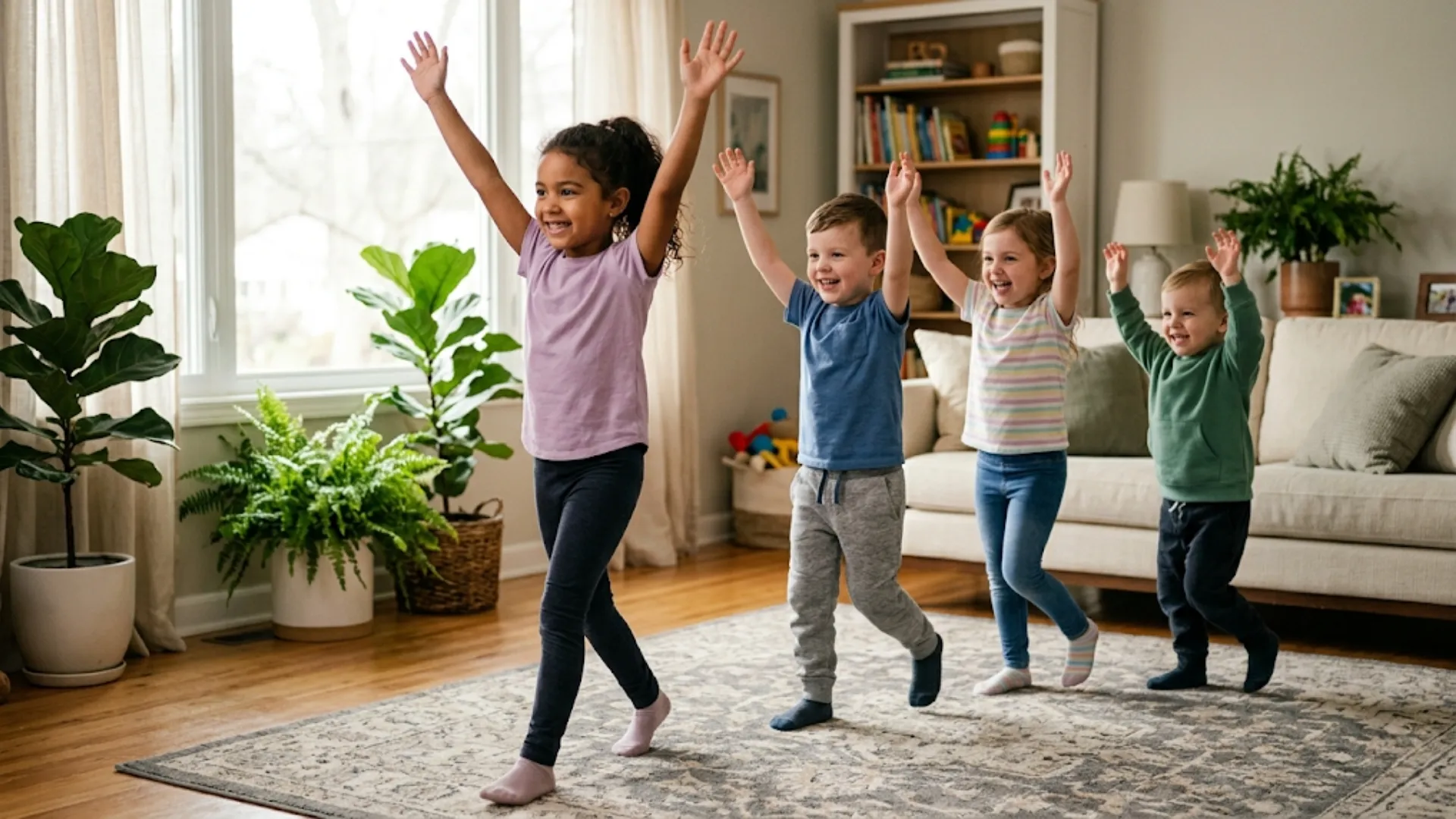
The Follow the Leader game is a classic movement-based activity where one player, the “leader,” performs a series of actions, poses, or movements while the other players stand in a line behind them and copy exactly what the leader does. When the leader changes, the fun starts all over again.
It has been played by children across generations and cultures, and there is a good reason it has stuck around. The game is endlessly flexible. You can make it calm and slow-paced for toddlers, or ramp it up into a full-body aerobic challenge for older kids. You can play it silently or add narration. You can move around the room or stay in one spot.
There really are very few rules, which actually makes it more accessible, not less.
How to Play Follow the Leader: Step-by-Step Instructions
Step 1: Choose a Leader
Start by selecting one child to be the leader. For very young children, a parent or teacher can take the first turn to model how the game works. For older kids, you can use a random method like drawing a name from a hat or doing a quick “one potato, two potato” count-out.
Step 2: Form a Line
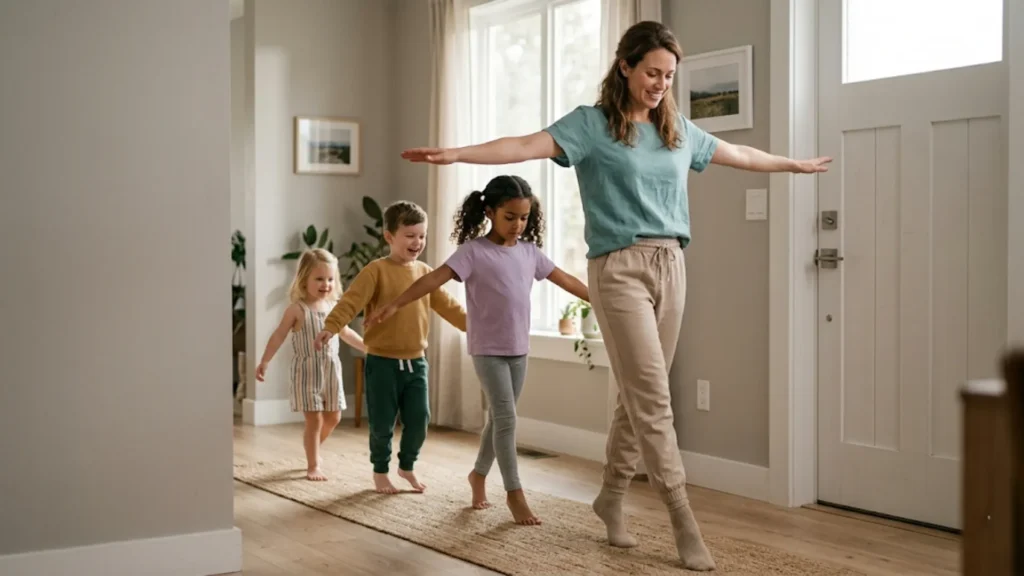
Have all the players stand in a single-file line behind the leader. Spread out slightly so there is enough room for everyone to move their arms and legs freely without bumping into each other.
Step 3: The Leader Begins Moving
The leader starts performing actions. These can be anything, such as jumping on one foot, waving both arms, walking on tiptoes, spinning in place, stomping loudly, crouching low, or marching with high knees. Everyone in the line behind copies every single movement exactly.
Step 4: Change the Leader
After a set time, usually one to two minutes, the leader moves to the back of the line and the next person in line becomes the new leader. Rotate until every child has had a turn.
Step 5: Keep It Moving
The game works best when transitions between leaders are quick and seamless. Keep the energy up and encourage children to be creative with their actions.
Rules of the Follow the Leader Game
The rules are simple enough that even toddlers can follow along, but they are worth spelling out clearly so everyone starts on the same page.
- All players must copy the leader’s movements as closely as possible.
- Players should not suggest movements to the leader during their turn.
- Anyone who forgets to follow or stops participating takes a short pause, then rejoins.
- The leader moves at a pace that others can realistically match.
- Everyone gets a fair turn as the leader.
For very young children, skip the elimination aspect entirely. The goal at that age is not to win but to participate, move, and enjoy the experience.
Benefits of Follow the Leader for Kids
This game packs in a surprising range of developmental benefits. It is not just physical exercise, though it certainly delivers that too.
Gross Motor Development
Following movements like jumping, hopping, stretching, and spinning strengthens the large muscle groups and improves overall physical coordination. Children who regularly engage in movement-based games tend to develop better balance and spatial awareness than those who spend most of their indoor time in sedentary activities.
Fine Motor Skills
When the leader uses smaller, more deliberate actions, such as pinching their fingers together, touching their nose, or moving their fingers in patterns, the followers have to observe carefully and replicate those precise movements. This strengthens fine motor control in a playful way.
Focus and Attention
To follow a leader successfully, children must watch carefully and react quickly. This sustained visual attention is excellent exercise for developing concentration, particularly in kids who find it difficult to stay still or focus during structured learning.
Turn-Taking and Social Skills
The rotating leadership structure naturally teaches children to wait their turn, respect the role of the current leader, and understand that everyone deserves their moment. These are foundational social skills that carry over into group learning and friendships.
Creativity and Imagination
When children become the leader, they have to think on their feet. What should I do next? What has not been done yet? This creative decision-making is genuinely valuable, especially for building confidence in self-expression.
Body Awareness
Mimicking another person’s movements encourages children to develop proprioception, the sense of where their own body is in space. This is a skill that underpins everything from handwriting to athletic performance.
| Developmental Benefit | How Follow the Leader Delivers It |
|---|---|
| Gross motor skills | Jumping, marching, spinning, hopping |
| Fine motor skills | Finger movements, hand gestures, detailed poses |
| Focus and attention | Watching and replicating actions in real time |
| Social skills | Turn-taking, respect for the leader role |
| Creativity | Making decisions as leader |
| Body awareness | Mirroring another’s physical movement |
Age Recommendations
The Follow the Leader game is one of those rare activities that genuinely works across a wide age range. That said, the way you run it should shift depending on who is playing.
Toddlers (Ages 1 to 3)
At this age, the parent or caregiver is almost always the leader to begin with. Keep actions slow, exaggerated, and simple. Patting your tummy, stretching your arms wide, and shaking your hands are all ideal. Toddlers love copying adult movements, and this game taps directly into that natural instinct. There is no need for formal rules. Just move and let them follow.
Preschoolers (Ages 3 to 5)
Children in this group can begin taking turns as leader with gentle guidance. Actions can become slightly more complex, like hopping twice, then spinning, then sitting down. Introduce animal movements to make it extra engaging. A short version of the game lasting five to ten minutes is usually ideal before attention drifts.
Early School Age (Ages 5 to 8)
This age group can handle a more structured version with clear turn-taking, slightly longer leader sessions, and more imaginative or challenging movements. They often love adding a theme, like pretending to be superheroes, astronauts, or animals.
Older Kids (Ages 8 and Up)
For older children, the game can become more challenging by speeding up the actions, layering multiple movements together, or introducing a “spot the mistake” rule where followers have to catch if the new leader does something slightly different from what the previous leader established.d.
Fun Variations to Keep the Game Fresh
Even a game this simple can get repetitive if you play it the exact same way every single time. Here are some creative twists that will keep kids excited about it.
Animal Follow the Leader
The leader can only do animal movements. Waddle like a penguin, gallop like a horse, slither along the floor like a snake, or stomp like an elephant. This version is fantastic for toddlers and preschoolers and pairs beautifully with other animal-themed activities like the Animal Walk Race for Kids.
Slow Motion Follow the Leader
Every movement must be performed in extremely slow motion. This sounds easy, but it is actually incredibly challenging for the body and requires tremendous focus. It is also oddly calming, which makes it a good wind-down activity before rest time.
Silent Follow the Leader
No one speaks, including the leader. Actions must be communicated entirely through movement. This version demands heightened visual attention and is great for developing non-verbal awareness.
Freeze Follow the Leader
The leader occasionally freezes mid-movement without warning, and everyone must freeze in exactly the same pose. This variation adds an element similar to the classic Freeze Dance for Kids game and introduces fast reaction time as a key skill.
Backwards Follow the Leader
Players stand in a line facing away from the leader. The leader calls out movements verbally instead of showing them, and everyone tries to match what is being described without seeing it. This works better with older children and builds listening and direction-following skills.
Mirror Follow the Leader
Instead of a line, players stand face-to-face with the leader. They must mirror movements in real time, which flips left and right. This connects well with the Mirror Game for Kids and adds a wonderful challenge to spatial thinking.
Setting Up for Success: Practical Tips for Parents and Teachers
The game itself needs no setup, but a few small preparations can make a big difference to how smoothly it runs.
Clear a Space
Move chairs, toys, and any breakable items to the edges of the room. You want a clear central area of at least a few meters in each direction so children can move freely without worrying about obstacles.
Establish Signals
Before you start, agree on a signal for switching leaders. A simple clap, a whistle, or the word “switch” works well. Having a clear signal avoids confusion and keeps the pace of the game moving.
Model First
Especially with younger children, always take the first turn as leader yourself. Show them what kinds of movements are appropriate, how to stay within the space, and what it looks like to follow carefully. Children learn enormously well by watching adults first.
Keep Turns Short for Young Children
Two minutes per leader is usually plenty for children under five. Longer turns can lead to leaders running out of ideas, which leads to boredom, which leads to the whole thing falling apart. Keep it tight and energetic.
Acknowledge Every Leader
When each child finishes their turn, give a quick acknowledgment. A “great leading!” or a round of applause keeps confidence high and makes sure every child feels seen, not just the ones who came up with the most impressive moves.
Common Mistakes to Avoid
Even a simple game like this has a few pitfalls worth knowing about in advance.
Letting the same child lead repeatedly. Even if one child is particularly enthusiastic, make sure the rotation is genuinely fair. Children who never get to lead can feel left out, and the learning opportunity of the leadership role is part of the game’s value.
Movements that are too difficult to copy. If the leader does something physically demanding that others cannot replicate, like a cartwheel in a small space, the followers become frustrated. Gently guide leaders toward inclusive movements that everyone can attempt.
Skipping the transition signal. Without a clear “switch” moment, leadership changes become confusing and sometimes contentious. Stick to a consistent signal.
Too long without a break. For young children especially, ten to fifteen minutes is a natural stopping point. Watch for signs of fatigue or frustration and wrap up while the energy is still good.
Underestimating quiet children. Some children are nervous about being the leader. Offer the option without forcing it, and consider letting a shy child “co-lead” alongside a more confident peer the first time.
Why Kids Genuinely Love This Game
Ask any group of children what makes Follow the Leader so much fun and you will probably get a mix of answers. Some love the silliness of making up weird movements. Others love the validation of having everyone copy exactly what they do. A few just love the movement itself.
There is something deeply satisfying about being copied. For a young child, having a room full of peers replicate your actions is a moment of genuine power and visibility. That experience is worth more than we sometimes give it credit for.
And on the following side of things, there is something almost meditative about focusing entirely on watching and copying another person. It pulls children out of their heads and into the present moment in a way that very few other activities manage.
This game also lends itself naturally to laughter. Someone does an unexpected movement, people lose balance trying to copy it, someone adds a funny face. These organic moments of shared humor are some of the best social bonding experiences young children can have.
Educational and Developmental Value
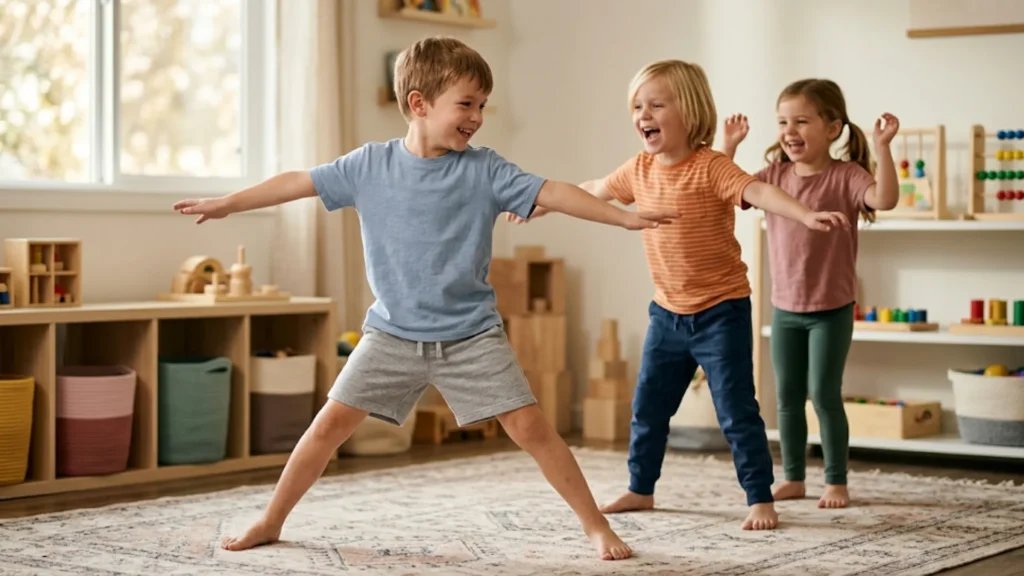
Follow the Leader is one of those games that looks like pure play but quietly delivers a lot of learning. It is worth understanding the research behind it, especially if you are a teacher or caregiver trying to justify movement breaks in an educational setting.
Movement-based learning, which includes games like this one, has been widely supported by research as a way to improve attention and retention in young children. A 2013 study published in the journal Health Psychology found that physically active children demonstrated better academic performance and improved cognitive function compared to their less active peers. Games that combine movement with observation and imitation, exactly what Follow the Leader does, hit multiple developmental targets at once.
For children who struggle with attention or sensory processing, movement games often provide a regulating effect. The focused observation required to follow a leader helps channel excess energy into purposeful action, which can make the transition back to calmer activities much smoother.
It also integrates beautifully with other learning goals. You can teach directional words by incorporating movements like “step to the left” or “turn to face the window.” You can reinforce number concepts by counting steps or jumps aloud. You can introduce vocabulary for body parts by pointing to them as movements. The possibilities for gentle educational layering are genuinely broad. For more ideas that blend movement with learning, the Hop and Count Game for Kids is another excellent option that keeps active kids engaged.
Safety Tips
The game is low-risk by nature, but a few sensible precautions are always worth mentioning.
- Check the floor surface. Rugs and carpets are safer than bare hardwood floors for activities involving jumping or spinning. If playing on a hard surface, ensure socks are non-slip or shoes are worn.
- Keep movements age-appropriate. Avoid encouraging very young children to hop on one foot for extended periods or perform movements that require strength or balance they have not yet developed.
- Watch the group size. In large groups, lines can become unwieldy. If you have more than eight or nine children, consider splitting into two parallel groups with separate leaders.
- Mind the space around furniture. Even with a cleared area, remind children where the boundaries are before you begin.
FAQ: Follow the Leader Game for Kids
What age is Follow the Leader appropriate for?
The Follow the Leader game can be enjoyed by children as young as one year old with adult participation, and it remains engaging well into the early school years. The rules and complexity of movements can be adjusted to suit different age groups, making it genuinely versatile.
How long should a game of Follow the Leader last?
For toddlers and preschoolers, aim for five to ten minutes. For school-age children, the game can run for fifteen to twenty minutes comfortably before interest starts to wane. Keep turn lengths short, around one to two minutes per leader, to maintain energy.
Can Follow the Leader be played with just two players?
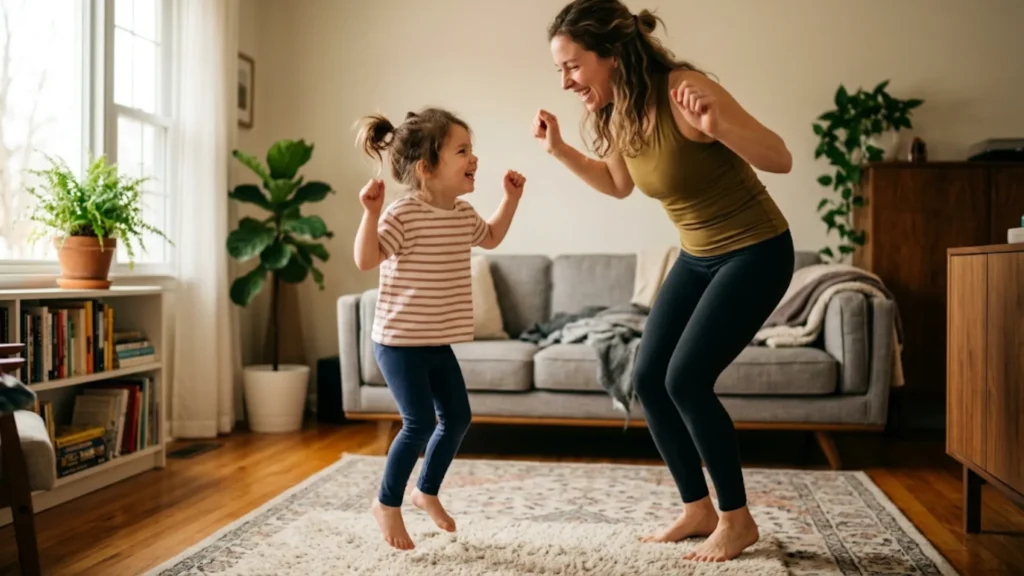
Absolutely. A parent and child, two siblings, or two friends can play the game perfectly well. The roles simply rotate back and forth between the two players. For one-on-one play, consider lengthening each leader’s turn slightly.
What are some good Follow the Leader movement ideas for kids?
Some popular movement ideas include jumping jacks, marching with high knees, spinning in place, crouching and standing up repeatedly, hopping on one foot, reaching up high then touching toes, crawling on all fours, and waddling like a duck. Animal movements are especially popular with younger children.
How does Follow the Leader help with child development?
The game supports gross and fine motor skill development, improves focus and visual attention, builds social skills through turn-taking, encourages creative thinking when leading, and develops body awareness and coordination. It is also a meaningful shared experience that supports bonding between children and caregivers.
Is Follow the Leader a good classroom activity?
Yes, it works extremely well in a classroom setting, particularly during movement breaks. It requires no materials, can involve a whole class, and can be wrapped up quickly when needed. Teachers can also use it to reinforce curriculum content by incorporating themed movements or academic elements.
Can you play Follow the Leader indoors in a small space?
Yes. The game can be adapted for very small spaces by limiting movements to actions that do not require much room, such as arm movements, facial expressions, hand gestures, and movements that can be done standing in place. For more creative ideas in small spaces, the Simon Says Game for Kids is a closely related option worth exploring.
Conclusion
The Follow the Leader game is one of those timeless activities that earns its place in any parent’s or teacher’s toolkit precisely because of how little it demands and how much it gives back. No toys needed, no screen required, no elaborate setup. Just a willing group of children, a bit of open space, and the invitation to move together.
What makes it truly special is how naturally it blends physical development with social learning and creative thinking. Children are building coordination and attention without realizing it. They are practicing patience and leadership without a formal lesson. And they are laughing and connecting in ways that matter far beyond the game itself.
Give it a try next time the weather drives everyone indoors, or whenever the room energy is getting restless and the usual activities are not cutting it. Start as the leader yourself, do something a little silly, and watch how quickly the room lights up. You might be surprised at how long the game keeps going once the children take over.