


Introduction
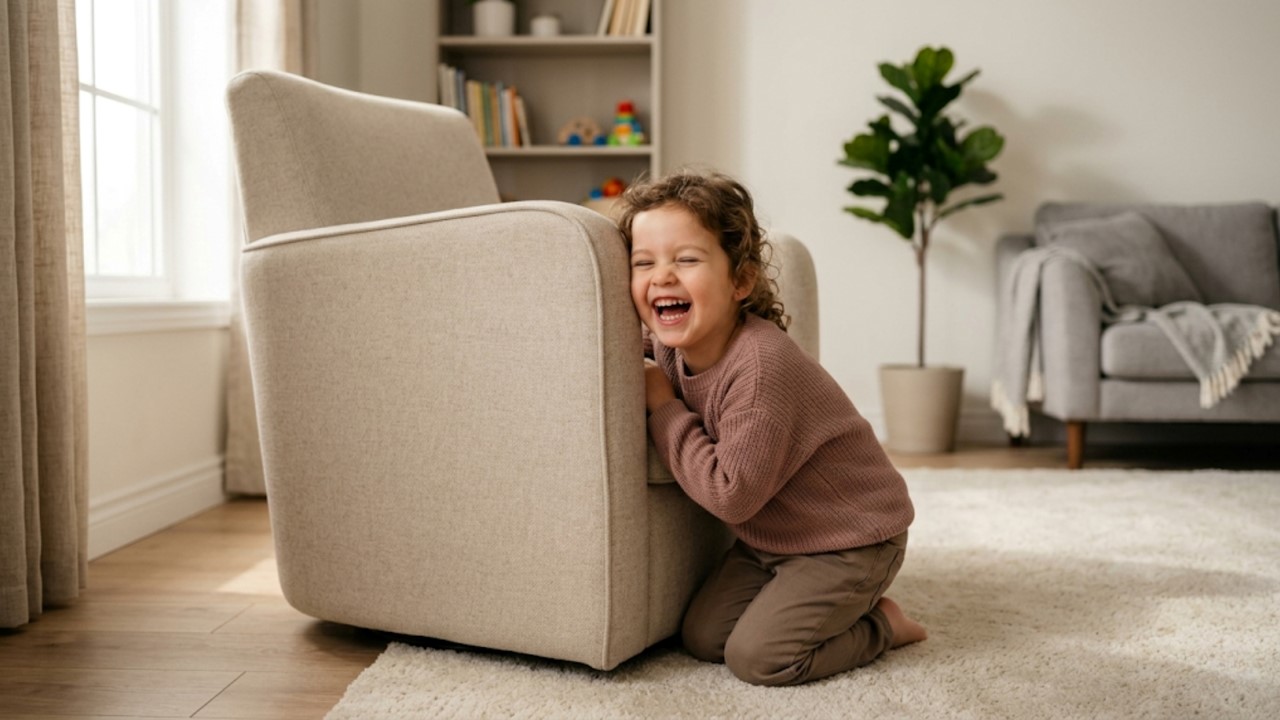
There are not many games that have survived completely intact across decades, cultures, and generations without needing a single update. Hide and Seek is one of them. Children have been playing it for centuries, and the reason is obvious to anyone who has ever watched a three-year-old squeeze behind a curtain and dissolve into giggles while waiting to be found.
It looks like pure, simple fun. And it is. But Hide and Seek for kids delivers far more than entertainment. It builds spatial reasoning, emotional regulation, patience, physical coordination, and social awareness, often all within a single ten-minute game. For parents and caregivers searching for a rainy-day indoor activity that genuinely engages children without a screen or a single piece of equipment, it is hard to beat.
This guide covers everything you need to run a great game of Hide and Seek indoors, including the classic rules, age-appropriate tips, creative variations, developmental benefits, and a few safety pointers worth keeping in mind before the counting begins.
What Is Hide and Seek?
Hide and Seek is one of the oldest and most universally recognized children’s games in the world. One player is designated as “It” and counts to a set number with their eyes closed while all other players scatter and hide. Once counting is done, the seeker searches for the hidden players. The last player to be found typically becomes “It” in the next round.
It is almost embarrassingly simple on paper. And yet the experience of playing it, particularly for young children, is rich with excitement, anticipation, and a healthy dose of controlled suspense. That combination of physical hiding and emotional tension is a big part of why the game is so universally appealing.
Different families and cultures have their own variations, but the core mechanic stays the same everywhere. One person seeks. Everyone else hides. The thrill is in both.
How to Play Hide and Seek Indoors: Step-by-Step Rules
Step 1: Choose Who Is “It”
Select one player to be the seeker. For young children playing for the first time, a parent or older sibling typically starts as “It” to model what the role involves. For subsequent rounds, the last person found in the previous round usually takes the next turn as seeker.
You can also use classic counting-out rhymes to select “It” randomly, which avoids any argument about fairness.
Step 2: Establish the Playing Area
Before counting begins, everyone should agree on the boundaries of the game. When playing indoors, decide which rooms are included and which are off-limits. Keeping the game within a defined space prevents children from wandering into unsafe areas and keeps the game from going on indefinitely.
A simple rule like “the game is between the living room, hallway, and first bedroom” works well. Make sure all players understand the boundaries before anyone starts hiding.
Step 3: Set the Counting Number
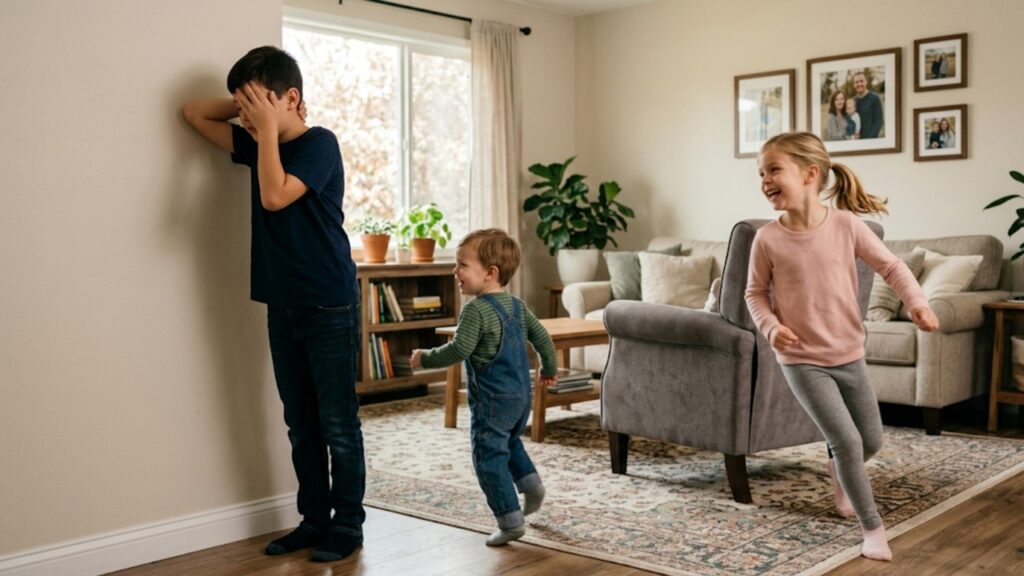
“It” stands at the designated base, usually a wall, sofa, or door, covers their eyes, and counts out loud to an agreed number. For toddlers and preschoolers, counting to ten is plenty. For older children, counting to twenty or thirty gives more time to find genuinely creative hiding spots.
Counting aloud matters. It is not just about giving hiders time. It is also an excellent incidental opportunity to reinforce number sequencing for younger children.
Step 4: Everyone Hides
While “It” counts, all other players scatter and find a hiding spot within the agreed boundaries. Players should stay quiet and still once hidden. Part of the skill of the game is choosing a spot that is hard to find but also realistic enough to reach before the count ends.
Step 5: The Seeker Searches
Once counting is complete, “It” calls out “Ready or not, here I come!” and begins searching. The seeker moves through the agreed playing area systematically, looking in likely hiding spots. When a player is found, they come out and wait at base until the round ends.
Step 6: End the Round
The round ends when all players have been found. The last player to be discovered is typically declared the winner of that round and becomes the next “It.”

Official Rules Worth Agreeing On Before You Play
One of the small frustrations with Hide and Seek, especially with children of mixed ages, is that everyone seems to have a slightly different version of the rules. Sorting these out before the first round saves a lot of squabbling.
Here are the core rules worth establishing clearly:
- No peeking during the count. Eyes must be covered and stay covered until the count is finished.
- Stay within the agreed boundaries. Hiding outside the defined area is not allowed.
- No moving once the seeker starts searching. Some families allow a “run to base” variation, but for indoor play with young children, staying put is simpler and safer.
- No giving away other players’ hiding spots. If you are already found, you do not call out hints about where others are hiding.
- Call out when you find someone. The seeker should say the player’s name or give a clear signal when a hider is discovered, so there is no confusion.
- Decide on a time limit. If the seeker has been looking for more than five minutes without finding everyone, a gentle hint system is a kind addition, especially for very young hiders who may have forgotten where the game boundaries are.
Developmental Benefits of Hide and Seek for Kids
This is where Hide and Seek genuinely earns its reputation as more than just a classic time-filler. The developmental benefits are broad, well-supported, and worth understanding, particularly if you are a parent or educator looking to justify regular play breaks.
Spatial Awareness and Problem Solving
Choosing a hiding spot requires children to mentally map the environment, assess the size of the space relative to their body, and predict where a seeker is likely to look first. This is a genuine exercise in spatial reasoning. Children who play games like Hide and Seek regularly tend to develop stronger mental mapping abilities, which supports skills in geometry, navigation, and even reading comprehension later in life.
Emotional Regulation
The anticipation of waiting to be found, the suspense of hearing footsteps getting closer, the decision to stay still when every instinct says to move, all of this is active practice in managing emotional arousal. For young children, learning to tolerate excitement without acting impulsively is a foundational skill, and Hide and Seek delivers that practice in a completely natural, pressure-free way.
Understanding Object Permanence
For the youngest players, particularly toddlers around eighteen months to three years, Hide and Seek directly reinforces the concept that things continue to exist even when they cannot be seen. This concept, known as object permanence, is a critical cognitive milestone. When a toddler understands that the parent who hid is still there even though they cannot be seen, they are applying object permanence in real time. This connects to the same developmental pathway explored in the Peekaboo Game for Babies and Toddlers.
Gross Motor Skills and Physical Coordination
Running, crouching, squeezing into small spaces, tiptoeing, and crawling are all physical movements Hide and Seek naturally demands. These actions develop balance, coordination, and body control in a completely organic way, far removed from anything that feels like exercise to a child.
Social and Perspective-Taking Skills
Playing Hide and Seek with a group requires children to think about things from another person’s point of view. Where will the seeker look? What would I do if I were the one searching? This perspective-taking is a cornerstone of empathy and social intelligence.
Language and Communication
Even something as simple as announcing boundaries, agreeing on the count, and calling out “ready or not, here I come” involves meaningful communication practice. For younger children, these verbal interactions build vocabulary and conversational turn-taking in a genuinely purposeful context.
| Developmental Benefit | How Hide and Seek Delivers It |
|---|---|
| Spatial reasoning | Choosing hiding spots, mentally mapping rooms |
| Emotional regulation | Managing suspense and anticipation |
| Object permanence | Understanding hidden things still exist |
| Gross motor skills | Running, crouching, crawling, tiptoeing |
| Social skills | Turn-taking, perspective-taking, fair play |
| Language development | Negotiating rules, counting aloud, communicating |
| Problem-solving | Planning and adapting hiding strategies |
Age Recommendations for Hide and Seek
Babies and Young Toddlers (Ages 1 to 2)
True Hide and Seek is a bit advanced for this age, but a simplified version works beautifully. The parent hides partially behind a blanket or a piece of furniture while the toddler “seeks.” The hider makes sounds to help the child find them. This bridges directly from Peekaboo into a more active version and is developmentally perfectly timed.
Preschoolers (Ages 3 to 5)
This is the sweet spot for classic indoor Hide and Seek. Children this age are capable enough to hide independently and patient enough to wait, though not always for long. Keep the boundaries tight, the count short, and the seeking enthusiastic. Make a big deal of every discovery. The emotional payoff of being found matters enormously at this age.
Early School Age (Ages 5 to 8)
Children in this range are ready for more complex rules, larger playing areas, and the full social dynamics of a multi-player game. They can handle longer counts, more strategic hiding spots, and the social challenge of staying quiet while others are found first. This age group also loves variations and rule modifications.
Older Kids and Tweens (Ages 8 and Up)
For older children, the classic version may feel slightly too familiar. Introducing variations like Sardines, Flashlight Hide and Seek, or themed rounds reinvigorates the game significantly. Older children also do well as the “rule keeper” in mixed-age games, which gives them responsibility and keeps them engaged.
Fun Variations of Hide and Seek for Kids
The classic version is always reliable, but a few well-chosen variations can completely transform the game and keep it feeling fresh across dozens of sessions.
Sardines
This is the reverse of the classic game. One player hides while everyone else seeks. When a seeker finds the hider, instead of calling it out, they silently squeeze into the hiding spot alongside them. The hiding spot gradually fills up like sardines in a tin until only one seeker is left still looking. It is hilarious, especially in small apartments, and perfect for families or groups of four or more.
Flashlight Hide and Seek
Played after dark or in a darkened room. The seeker uses a torch or flashlight to find hidden players. Being “found” means being illuminated by the light beam. This version adds atmosphere and excitement that older children love. Make sure the play area is completely safe before switching the lights off.
Counting Variations
Instead of counting in English, the seeker counts in a second language, backward from twenty, by twos, or using the alphabet. This turns the counting portion of the game into a learning moment without it ever feeling like a lesson.
Hide the Object
For very young children who are not yet ready to hide themselves, this variation is perfect. One adult hides a favourite toy somewhere in the room while the child covers their eyes, then the child seeks the object. This version is calmer, quieter, and excellent for developing focus and spatial memory. It links naturally to activities like the Treasure Hunt at Home concept.
Themed Hide and Seek
Give the game a narrative frame. Everyone is a spy hiding from an enemy agent. The seeker is a detective looking for clues. Players are animals hiding from a predator. Themed versions elevate the imaginative play dimension significantly and keep older children engaged for longer.
Noisy Hide and Seek
Every few seconds, hidden players must make a designated sound, such as a gentle hum, a soft clap, or an animal noise. The seeker uses sound as well as sight to find players. This variation is wonderful for developing auditory attention, and younger children find it absolutely delightful.
Parent and Teacher Tips for a Better Game
A few practical observations from people who have run this game many times with many different groups.
Praise creative hiding spots. Even if a child hid in the most obvious place imaginable, find something to acknowledge. “That was a great idea to use the curtain” builds confidence and willingness to try again next time.
Do not rush the seeker. Young children counting to ten can feel pressure to go fast. Encourage a slow, deliberate count and remind them that good hiding spots take a moment to check properly.
Designate a safe word. For very young or anxious children, agree on a word they can call out if they feel scared or want to come out early without it meaning the game is over for everyone else. This gives them control over their own experience.
Mix age groups thoughtfully. In mixed-age games, consider giving older children a more complex role, like being the “hint master” who can offer one clue per round, rather than simply playing alongside much younger children without any added challenge.
Use the game as a natural transition. Hide and Seek is a brilliant pre-bedtime activity when played in its calmer, quieter versions. It burns off the last of the day’s energy in a focused way and ends with the satisfying resolution of everyone being found.
Pair it with active learning. The searching phase of the game can be extended into counting steps, identifying colours in the room, or naming shapes encountered along the way. This layering works well for children who thrive on structured challenges alongside free play. The Direction Learning Game for Kids is an excellent companion activity that builds on the spatial awareness Hide and Seek naturally develops.
Common Mistakes to Avoid
Skipping the boundary conversation. Without clear limits, children hide in places that are genuinely difficult to reach, potentially unsafe, or simply outside the scope of a reasonably manageable game. Always set boundaries first.
Letting one child always be “It.” Some children will volunteer for the seeking role every round without complaint, while others always end up hiding. Rotate roles deliberately and make sure every child experiences both sides of the game.
Allowing peeking. It sounds minor, but children who peek undermine the trust structure of the game. It is worth addressing calmly and clearly the first time it happens.
Making the game too competitive with very young children. At ages three to five, the goal is participation and fun, not winning. Avoid emphasising who was found first or last in a way that makes any child feel singled out negatively.
Playing in cluttered or hazardous spaces. A quick visual sweep of the playing area before the game starts takes thirty seconds and prevents the possibility of a child hiding in or near something dangerous.
Why Kids Are So Drawn to Hide and Seek
There is a psychological dimension to this game that is genuinely fascinating. The combination of hiding and seeking taps into something primal in children’s play instincts. Hiding safely while a “threat” looks for you is a controlled, safe version of a scenario that activates the same excitement pathways as real adventure.
For young children, being hidden is not just about not being seen. There is a genuine sense of agency and control in choosing a spot, getting small and quiet, and waiting. It is one of the few experiences where the child controls the situation entirely. That autonomy is deeply satisfying.
Being the seeker, on the other hand, is about competence and detection. Children who are good seekers feel genuinely capable. The deductive thinking involved, checking likely spots first, listening for sounds, noticing displaced objects, feels like real problem-solving because it is.
Together, these experiences explain why children will ask to play Hide and Seek again and again and again. The game is never quite the same twice, and the emotional rewards on both sides of it are consistently high.
For more ideas that tap into children’s natural love of discovery and searching, the Team Treasure Hunt for Kids is a brilliant extension activity that brings similar excitement to a group setting with an added collaborative element.
Safety Tips for Indoor Hide and Seek
The game is low-risk, but a few precautions make it consistently safe.
- Check for hazards before you start. Open drawers, sharp corners, unstable furniture, and climbable shelving are all worth addressing before children start scouting hiding spots.
- Never hide in enclosed spaces. Establish a clear rule that children should not hide inside closed cupboards, under beds against walls, inside trunks or boxes with lids, or anywhere they could become stuck or struggle to breathe freely.
- Keep younger children visible to an adult. For toddlers and preschoolers, the adult in the game should always know roughly where the child is, even during the hiding phase.
- Avoid playing near staircases without a gate. Excited children running and hiding near stairs is a combination that warrants a gate or a clear boundary rule.
- Keep lights on or at low levels. For younger children especially, playing in genuinely dark spaces can tip quickly from exciting to frightening. A night light or low lamp in each room keeps the atmosphere manageable.
- Agree on a “game pause” signal. A simple word or sound that means “everyone stop and come out” is useful in case of a real safety concern during the game.
FAQ: Hide and Seek for Kids
What age is Hide and Seek appropriate for?
A simplified version of Hide and Seek is suitable from around eighteen months, with adult participation. The classic game with full rules works well from age three onward. Complexity and playing area size can be scaled up as children get older, making it genuinely engaging for children up to ten or eleven years.
How do you play Hide and Seek with a toddler indoors?
For toddlers, keep the rules extremely simple. The adult hides with exaggerated incompetence, choosing very obvious spots or calling out helpful hints. Count to five or ten out loud together before the toddler starts seeking. The goal is the shared experience and the joy of discovery, not genuine competition.
How many players do you need for Hide and Seek?
The game can technically be played with just two players, one seeker and one hider. It works well with groups of up to eight or ten players indoors, though very large groups benefit from expanded playing areas or the Sardines variation to stay manageable.
What are good hiding spots for kids indoors?
Good child-appropriate hiding spots include behind sofas, under tables, around the corner of a hallway, behind open doors, inside large wardrobe spaces with the door slightly ajar, and behind curtains. Spots should be accessible, safe, and within the agreed playing area.
Why is Hide and Seek good for child development?
Hide and Seek supports spatial reasoning, emotional regulation, gross motor development, object permanence in younger children, social skills, perspective-taking, and language development. It is one of the few games that simultaneously exercises the body and the brain in a natural, engaging way.
Can Hide and Seek be played quietly for indoor settings?
Yes. For quieter play, simply establish a “silent version” rule where both seekers and hiders must stay completely quiet throughout. This variation is excellent for apartment living and is actually more cognitively demanding, as the seeker must rely entirely on visual detection rather than sound.
What is the Sardines variation of Hide and Seek?
In Sardines, one player hides while everyone else seeks. When a seeker finds the hider, they silently join them in the hiding spot without alerting the other seekers. The game continues until everyone has found the spot and squeezed in. The last seeker to find the group is the loser of that round and becomes the first hider in the next.
Conclusion
Hide and Seek has stayed relevant for a reason. It is genuinely one of the most complete play experiences available to a young child, combining physical movement, strategic thinking, emotional management, and social interaction all in one simple, equipment-free package.
For parents looking for an indoor activity that does not require preparation, does not create a mess, and holds a child’s attention from start to finish, it is hard to find something more reliable. For teachers and caregivers running active breaks in classrooms or group settings, the game scales effortlessly and can be adapted in minutes to suit any age or energy level.
The next time you are indoors with a restless child and thirty minutes to fill, try skipping the screens and suggesting a round of Hide and Seek instead. Cover your eyes, count to twenty, and listen for the giggling. It is almost always coming from somewhere more creative than you expected.